
Plant Success vs Espoma vs HUMKO: Propagule Density Comparison
You've probably wasted money on mycorrhizal products that barely work. The difference between brands isn't just price—it's a shocking thousand-fold variation in actual fungal density. Some premium products contain 16,000+ propagules per gram, while popular alternatives deliver less than 100.
Key Takeaways
- Plant Success offers ultra-high propagule densities, with up to 1.6 million propagules per gram in its Soluble formula
- Espoma's Myco-tone shows significantly lower concentrations at just 0.072 endomycorrhizal propagules per cubic centimeter
- HUMKO positions itself as a European alternative with local Slovenian production and claims 3x industry standard density
- Propagule density determines colonization success, with research showing optimal ranges of 5-6 spores per seed for maximum root development
- Commercial mycorrhizal products vary dramatically from 100 to over 10,000 propagules per gram, making density comparisons crucial for plant success
When investing in premium hedges, trees, or permanent plantings, the mycorrhizal inoculant you choose can determine whether your expensive plants thrive or struggle. The density of viable propagules—the fungal structures that form life-saving root partnerships—varies dramatically between leading brands, creating significant differences in colonization success and long-term plant survival.
Plant Success Offers Ultra-High Concentrations
Great White: 175,449 Endomycorrhizal Plus 99.5 Million Ectomycorrhizal Propagules Per Pound
Plant Success is recognized for its high mycorrhizal concentrations. Their flagship Great White formula delivers approximately 175,449 endomycorrhizal propagules alongside 99.5 million ectomycorrhizal propagules per pound. This dual-fungal approach ensures compatibility with both herbaceous plants and woody species, providing root zone enhancement regardless of plant type.
The concentration difference becomes clear when converted to practical application rates. Great White's density allows for minimal product usage while delivering maximum fungal colonization potential. Professional growers and landscapers rely on these numbers when calculating cost-per-treated plant, often finding that higher upfront costs translate to better per-application value.
Soluble Formula: 1,624,266 Propagules Per Gram
Plant Success takes concentration to another level with their Soluble line, delivering approximately 1.6 million propagules per gram. This water-soluble format allows for precise application through irrigation systems or as root drenches during transplanting. The Soluble formula contains diverse endomycorrhizal species, including Glomus aggregatum, intraradices, mosseae, etunicatum, and clarum at varying concentrations, complemented by ectomycorrhizae such as Pisolithus tinctorius at 1,100,000 propagules per gram.
For EU gardeners investing in expensive plantings, mycorrhizal products with verified high propagule counts provide the biological insurance policy needed for long-term plant establishment and survival.
Broad Species Diversity Across Endo and Ecto Types
Plant Success products typically include 16 different fungal species, combining endomycorrhizae for most garden plants with ectomycorrhizae for trees and shrubs. This diversity ensures compatibility across varied planting scenarios, from vegetable gardens to ornamental landscapes. The inclusion of beneficial bacteria and Trichoderma fungi creates a complete biological package that addresses multiple plant health factors simultaneously.
Espoma Myco-tone Shows Significantly Lower Densities
Endomycorrhizal Count: Only 0.072 Propagules Per CC
Espoma's Myco-tone, commonly found integrated into their potting mixes, provides relatively modest fungal concentrations. Laboratory analysis of their Organic Seed Starter Mix reveals just 0.072 endomycorrhizal propagules per cubic centimeter, totaling approximately 2,040 propagules per cubic foot across four species. This represents a significant reduction compared to concentrated inoculants from other manufacturers.
While these numbers appear low, Espoma's approach focuses on convenience rather than maximum biological impact. The mycorrhizae come pre-mixed in growing media, eliminating separate application steps for home gardeners who prioritize simplicity over optimization.
Ectomycorrhizal Varies: 121.8 to 131.38 Propagules Per CC
Espoma shows stronger performance in ectomycorrhizal delivery, with concentrations ranging from 121.8 to 131.38 propagules per cubic centimeter (approximately 3.7 million propagules per cubic foot) from three species. This higher ectomycorrhizal count benefits tree and shrub plantings, though the overall biological impact remains limited compared to dedicated inoculant products.
The variability in concentration between endo and ectomycorrhizae reflects Espoma's soil-amendment approach rather than targeted biological enhancement. For serious landscaping investments, this convenience-focused strategy may not provide sufficient fungal colonization pressure.
HUMKO Positions as European Alternative
Local Production in Slovenia
HUMKO operates from Slovenia, positioning itself as the European answer to North American mycorrhizal products. Their Mikohum Mycorrhiza product claims a density of 360 propagules per square meter, marketed as "three times the industry standard." This European production offers advantages in shipping costs, regulatory compliance, and reduced carbon footprint for EU customers.
The company's 40-year history in plant nutrition and biological soil amendments provides credibility in European markets where local sourcing and organic certification carry significant weight. HUMKO's approach emphasizes practical application rates measured in square meters rather than highly technical per-gram calculations.
Clay Granule Application Method
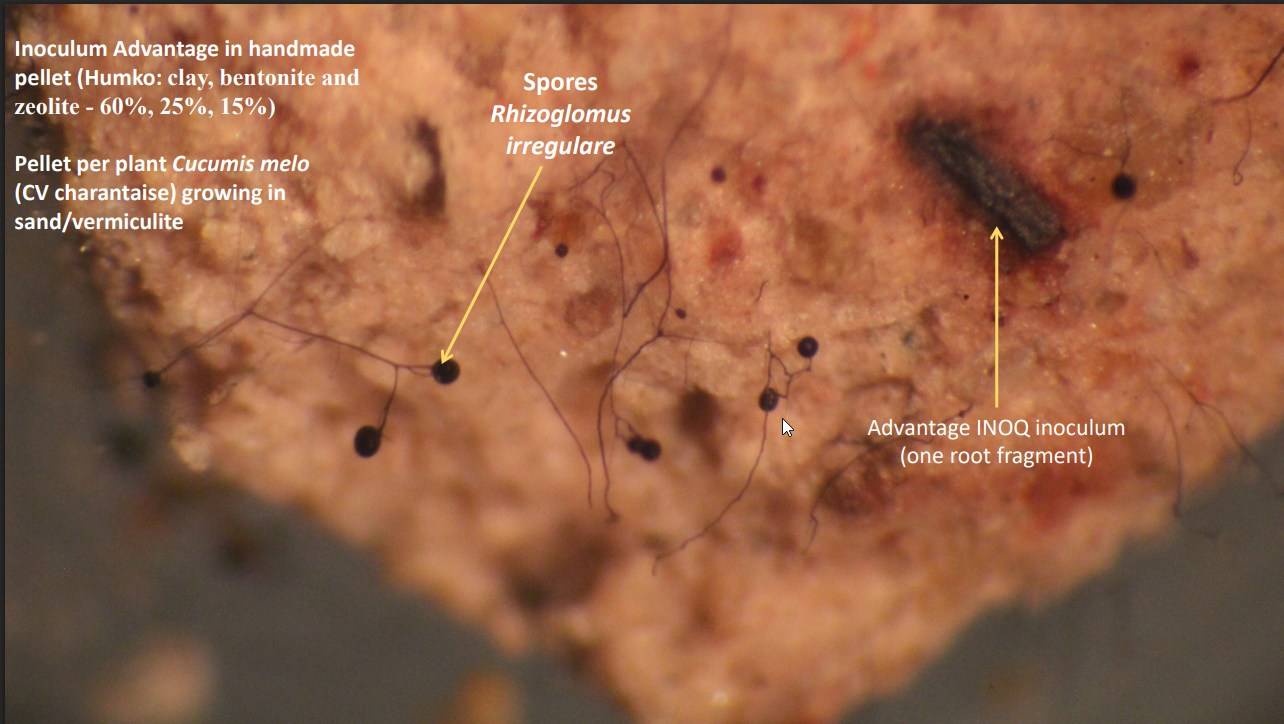
HUMKO delivers their mycorrhizal fungi on clay granules, creating a different application experience compared to powder-based competitors. The granular format allows for even distribution across planting areas and may provide better storage stability in varying climate conditions. This carrier system also enables controlled release of fungi as the clay gradually breaks down in soil.
The clay carrier approach reflects European preferences for soil-building amendments that improve structure while delivering biological benefits. This dual-purpose strategy appeals to gardeners seeking soil enhancement rather than single-function inoculants.
Why Propagule Density Determines Plant Success
Minimum Viable Concentrations for Root Colonization
Propagule density directly correlates with colonization success rates in field conditions. Low-concentration products may fail to establish adequate fungal populations, especially in stressed soils or challenging environmental conditions. The propagules—comprising spores, hyphae, and colonized root fragments—must reach critical mass to overcome natural mortality and competition from native soil microorganisms.
Regulatory standards in countries like Indonesia mandate minimum concentrations of 2,300 infective propagules per gram for commercial root inoculants, highlighting the importance of quantifiable density standards. These benchmarks exist because field research consistently demonstrates a correlation between propagule numbers and plant performance outcomes.
Research Shows 2+ Spores Per Seed Required, 5-6 Optimal
Scientific studies on Rhizophagus irregularis, formerly known as Glomus intraradices, reveal that an optimal spore density of 5-6 spores per seed produces superior root colonization rates of 75-84%. This research establishes clear numerical targets for effective inoculation, moving beyond vague "contains mycorrhizae" claims to measurable biological standards.
Field trials indicate that commercial inoculation rates are frequently insufficient for significant plant growth improvements under real-world conditions. Higher concentrations become necessary to achieve meaningful colonization when dealing with factors like soil sterilization, environmental stress, and competition from established soil biology.
Commercial Range: 5.6 to 16,000+ Propagules Per Gram
The commercial mycorrhizal market spans an enormous range, with basic products containing as few as 100 propagules per gram while premium concentrates exceed 16,000 propagules per gram. This thousand-fold variation explains why seemingly similar products produce dramatically different results in practice.
Industry analysis reveals that most commercial mycorrhizal products contain over 100 propagules per gram, with highly concentrated powder formulations often exceeding 10,000 propagules per gram. Understanding these ranges helps gardeners make informed decisions based on actual biological delivery rather than marketing claims.
Plant Success Products Offer High Propagule Density Per Dollar
When analyzing cost-effectiveness across propagule delivery, Plant Success products, due to their high concentration, can be a competitive option for serious applications despite higher per-unit pricing. The ultra-high concentrations allow for minimal application rates while maximizing biological impact. Professional landscapers often consider cost-per-million propagules for comparison, and Plant Success products can be economical choices for serious applications.
The economic advantage becomes pronounced in commercial settings where labor costs for repeated applications exceed material costs. Plant Success products deliver sufficient propagule density for single-application success, while lower-concentration alternatives may require multiple treatments to achieve comparable colonization rates.
For serious gardeners and professionals seeking maximum plant survival insurance, the propagule density comparison clearly favors concentrated products from established manufacturers over convenience-oriented soil amendments with minimal fungal content.
Learn more about professional-grade mycorrhizal solutions and soil enhancement technologies at HUMKO, where 40 years of European plant nutrition expertise meets modern biological soil science.

The Humko Plant Health Expert Team is a group of horticultural scientists, soil biologists, and professional gardeners based in Bled, Slovenia. With roots going back to 1985, our team brings together nearly four decades of hands-on research in mycorrhizal biology, humic acid chemistry, substrate science, and professional plant nutrition.
We've worked on over 1,000 projects — from Dutch-style commercial greenhouses and golf courses to vertical green walls, ornamental gardens, and urban rooftop installations. Our formulas have been field-tested in the most demanding growing environments on earth before we ever offered them to home gardeners.
Everything we publish is grounded in real science and real growing experience. We don't repeat what's already on the bag — we explain why plants behave the way they do, and what actually makes a difference in the soil. Our goal is simple: help you grow plants that don't just survive, but thrive — with less guessing and less anxiety.
Based in Slovenia | EU-certified products | 40 years of professional horticulture