
Liquid Humic Acid for Fruit Trees: Nutrient Chelation in Calcareous Soils
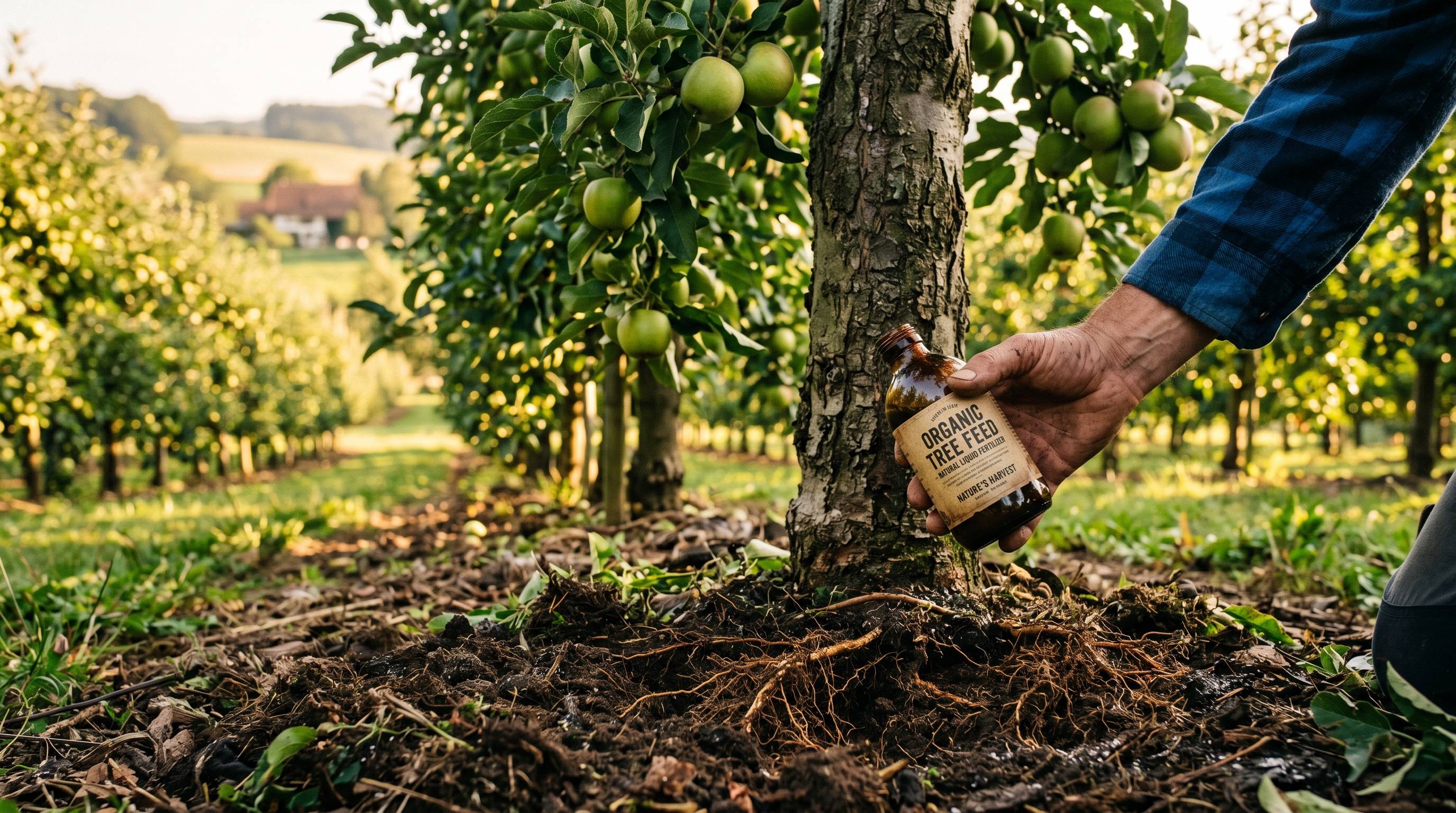
If you're growing fruit trees in alkaline soil, you've probably noticed yellowing leaves and disappointing yields—no matter how much fertiliser you apply. The problem isn't what you're feeding your trees; it's that they can't access the nutrients already locked in your soil.
Key Takeaways
Liquid humic acid improves nutrient availability in calcareous soils by chelating essential micronutrients like iron, zinc, and manganese that become locked up in alkaline conditions
Vermicompost-derived humic acids offer superior molecular structure compared to leonardite extracts, providing enhanced biological activity for fruit trees
Professional applications show yield increases in fruit crops, with improved water retention reducing irrigation needs under stress conditions
Strategic timing from pre-bloom through fruit set maximises effectiveness, with proper tank mixing protocols ensuring compatibility with existing fertigation systems
Calcareous soils present ongoing challenges for fruit growers across Europe's Mediterranean regions, where alkaline conditions systematically reduce nutrient availability and compromise tree health. Professional growers face mounting pressure to maintain yields whilst managing increasingly volatile weather patterns and rising input costs. The solution lies in understanding how liquid humic acid transforms nutrient dynamics in these challenging growing environments.
Why Calcareous Soils Lock Up Nutrients Your Fruit Trees Need
Calcareous soils, characterised by high calcium carbonate content and pH levels above 7.5, create a hostile environment for essential micronutrient availability. Iron, zinc, and manganese—critical elements for chlorophyll production, enzyme function, and overall tree vitality—become chemically bound in forms that roots cannot access. This nutritional bottleneck manifests as yellowing leaves (chlorosis), stunted growth, and reduced fruit quality, despite adequate fertiliser applications.
The alkaline chemistry of these soils triggers precipitation reactions that convert soluble nutrients into insoluble compounds. Iron transforms from the plant-available Fe²⁺ form into Fe³⁺ hydroxides, whilst phosphate binds with calcium to form unavailable calcium phosphate complexes. Traditional fertilisation approaches often prove inadequate, as newly applied nutrients quickly succumb to the same fixing mechanisms that created the deficiency initially.
Vineyards and orchards on limestone-derived soils routinely struggle with iron deficiency chlorosis, particularly during periods when root activity remains limited. The economic impact extends beyond immediate yield losses, affecting fruit storability, colour development, and market value. AgroVerm liquid humic acid addresses these challenges by fundamentally altering nutrient chemistry through molecular chelation processes.
How Liquid Humic Acid Unlocks Micronutrient Availability
1. Chelation Chemistry That Works in Alkaline Conditions
Humic acids function as natural chelating agents, forming stable ring structures around metal ions through their carboxyl and hydroxyl functional groups. This molecular embrace prevents nutrient precipitation whilst maintaining bioavailability for root uptake. Unlike some synthetic chelates that may break down under high pH conditions, humic acid complexes remain stable across the alkaline pH range typical of calcareous soils.
The chelation process occurs through coordinate bonding, where humic acid molecules donate electron pairs to form stable complexes with micronutrients. These complexes protect nutrients from precipitation reactions whilst remaining small enough for root absorption. Research demonstrates that humic acid chelation significantly increases iron availability in alkaline soils, transforming previously inaccessible nutrients into readily absorbable forms.
2. Optimizing Iron, Zinc, and Manganese Availability
Iron deficiency represents the most visible manifestation of nutrient lockup in calcareous soils, but zinc and manganese limitations often prove equally damaging to fruit production. Humic acid applications create a protective environment around these micronutrients, preventing oxidation and precipitation that typically occurs in high-pH conditions. Field trials show improved leaf chlorophyll content and reduced interveinal chlorosis following humic acid treatment.
Zinc availability particularly benefits from humic acid chelation, as this element plays crucial roles in auxin production, protein synthesis, and fruit development. Manganese, essential for photosynthesis and enzyme activation, becomes more mobile in the soil solution when complexed with humic acids. The combined effect translates into improved fruit set, enhanced colour development, and increased sugar accumulation during ripening phases.
3. pH Buffering for Sustained Root Zone Health
Beyond direct nutrient chelation, humic acids provide valuable pH buffering capacity that moderates extreme alkaline conditions around the root zone. This buffering action creates localised soil environments more conducive to nutrient availability and root function. The organic acids present in humic substances gradually release protons, effectively lowering rhizosphere pH whilst maintaining overall soil structure integrity.
Root hair development improves significantly in pH-buffered environments, increasing the surface area available for nutrient absorption. Enhanced root growth translates into better drought tolerance and improved access to soil nutrients throughout the growing season. Professional growers report noticeable improvements in tree vigour and stress resistance following consistent humic acid applications.
Vermicompost-Derived Humic Acid: Superior Molecular Structure
Why Earthworm Castings Create More Bioactive Compounds
Earthworm-derived humic acids possess different molecular characteristics compared to leonardite or lignite extracts commonly used in commercial products. The biological processing that occurs within earthworm digestive systems creates humic compounds with enhanced bioactivity and plant availability. Eisenia fetida earthworms, used in vermicompost production, contribute to beneficial microorganisms and enzymes that enhance humification processes.
The controlled vermiculture environment produces humic acids rich in amino acids, growth hormones, and bioactive compounds. Research indicates that vermicompost-derived humic substances contain higher concentrations of plant growth regulators compared to mined sources, directly contributing to improved root development and nutrient uptake efficiency.
H/C and O/C Ratios: Indicators of Humification Quality
Chemical analysis reveals that earthworm-derived humic acids maintain favourable hydrogen-to-carbon (H/C) ratios, indicating high aliphatic content and enhanced biological activity. The oxygen-to-carbon (O/C) ratio demonstrates abundant functional groups capable of nutrient chelation and soil binding. These molecular characteristics mirror the humic substances found in deciduous forest soils—nature's most fertile growing environments.
Lower H/C ratios in leonardite extracts indicate higher aromaticity and reduced bioactivity, whilst the favourable ratios in vermicompost products correlate with increased nutrient complexation capacity and root stimulation properties. Laboratory testing shows enhanced root hair development and increased nutrient uptake when plants receive vermicompost-derived humic acids compared to alternative sources.
Documented Performance Gains in Fruit Production
1. Yield Increases in Specific Fruit Crops
Field trials document consistent yield improvements across diverse fruit crops following strategic humic acid applications. Fruit orchards in Mediterranean climates show yield increases when humic acid treatments combine with optimised irrigation management. Production data from calcareous soil regions indicates performance gains, with particularly notable improvements in fruit size uniformity and pack-out percentages.
A review of biostimulant trials across European locations reports average yield increases when humic substances integrate into existing fertility programmes. Stone fruit orchards demonstrate strong responses, with yields improving whilst maintaining or enhancing fruit quality parameters. These gains translate into significant economic returns given typical fruit values and production costs.
2. Enhanced Water Retention and Stress Tolerance
Humic acid applications improve soil water-holding capacity through enhanced aggregation and increased organic matter content. Field measurements show improvements in plant-available water following consistent humic acid treatments over multiple growing seasons. This enhanced water retention proves particularly valuable during drought stress periods common in Mediterranean fruit-growing regions.
Stress tolerance benefits extend beyond drought resistance to include improved heat tolerance and enhanced recovery from transplant shock. Young tree establishment rates increase significantly when root systems receive humic acid treatments during planting. Professional nurseries report improvements in survival rates and earlier return to active growth following transplanting operations.
3. Improved Fruit Size and Sugar Content
Quality improvements often prove more economically significant than yield increases alone. Grape trials document improved Brix-to-acid ratios and enhanced colour development following foliar humic acid applications. Table grape production shows particular benefits, with increased berry size and improved cluster uniformity contributing to premium market positioning.
Citrus applications demonstrate enhanced fruit size distribution and improved juice content, whilst stone fruit benefits include increased sugar accumulation and extended storage life. These quality improvements enable access to premium markets and direct-sale opportunities that substantially increase per-unit returns for professional growers.
Application Protocols for Professional Growers
Variable Application Rates Based on Product and Crop
Professional application rates typically range from 20-30 litres per hectare per growing season, divided across multiple applications aligned with key phenological stages. Young orchards may require adjusted rates during establishment years, whilst mature, high-producing blocks benefit from full rates during peak growth periods. Fertigation systems enable precise delivery and uniform distribution throughout the root zone.
Container-grown fruit trees respond well to regular humic acid concentrate applications every 2-3 weeks during active growth. Foliar applications complement soil treatments using appropriate dilution rates in water, maintaining solution concentrations to prevent leaf burn. Product concentration varies significantly between suppliers, requiring careful label review and dilution calculations.
Critical Timing: Pre-Bloom to Fruit Set
Optimal timing begins with early-season applications during bud break to activate root systems and prepare soil biology for nutrient cycling. Pre-bloom applications support flower development and pollen viability, whilst post-bloom treatments focus on fruit set and early cell division phases. Stone fruits benefit from additional applications during pit hardening to support size potential development.
Pome fruits show strong responses to applications timed with cell division phases, when fruit size potential becomes established. Late-season applications support sugar accumulation and stress tolerance. Post-harvest applications help restore tree reserves and prepare for subsequent season flower bud development.
Tank Mixing Compatibility Guidelines
Humic acid solutions maintain compatibility with most water-soluble fertilisers and many plant protection products, but require careful attention to mixing order and pH management. Add humic acids to the spray tank after other components to prevent precipitation with calcium or magnesium-containing products. Maintain final solution pH within appropriate ranges for optimal stability and plant uptake.
Avoid mixing with copper-based fungicides or high-concentration phosphate fertilisers without prior jar testing. Sequential applications separated by 3-7 days provide safer alternatives when compatibility questions arise. Professional growers benefit from maintaining detailed mixing records and conducting small-scale compatibility tests before full-field applications.
EU Regulatory Compliance and Quality Standards
Plant Biostimulant Certification Under Regulation 2019/1009
European Union Regulation 2019/1009 establishes harmonised standards for plant biostimulants, including humic acid products intended to improve nutrient use efficiency and stress tolerance. CE marking indicates compliance with safety requirements and contaminant limits, providing professional growers with regulatory confidence for food production applications. Products meeting these standards undergo rigorous testing for heavy metals, pathogens, and efficacy validation.
The regulatory framework supports vermicompost-derived materials as component sources, supporting traceability and quality assurance programmes. Documentation requirements include clear labelling of humic acid content, application rates, and storage instructions. Professional purchasers should prioritise suppliers providing regulatory compliance documentation and batch-specific analysis certificates.
Organic Farming Compatibility and Regulatory Traceability
Organic certification bodies generally approve humic acid products derived from composted organic materials, including vermicompost sources. Organic production standards require that soil improvers originate from acceptable input materials without synthetic processing aids. Closed-loop vermiculture systems provide ideal traceability for organic compliance, documenting feed sources and processing methods.
Quality assurance programmes ensure consistent product composition and freedom from prohibited substances. Professional organic growers benefit from suppliers maintaining documentation, including input material sources, processing methods, and quality control testing. Annual certification audits require detailed records of all soil amendments and their compliance status.
AgroVerm Delivers Professional-Grade Nutrient Chelation for Sustainable Fruit Production
Vermicompost-derived humic acid represents the evolution of soil biology management for professional fruit production. The sophisticated molecular structure created through earthworm processing delivers superior chelation capacity whilst supporting beneficial soil microorganisms essential for long-term orchard health. Professional growers implementing strategic humic acid programmes report consistent improvements in nutrient efficiency, stress tolerance, and fruit quality parameters that translate into measurable economic returns.
Success requires understanding the unique chemistry of calcareous soils and timing applications to complement natural tree phenology. The investment in quality humic acid products typically generates positive returns through improved yields, enhanced fruit quality, and reduced irrigation requirements. Modern fruit production demands integrated approaches that combine traditional agronomy with advanced biological tools to maintain competitiveness in challenging growing conditions.
The transition toward sustainable intensification creates opportunities for growers who adopt proven biological solutions early in their implementation. Professional-grade humic acid products provide the foundation for reduced-input production systems that maintain productivity whilst improving environmental stewardship. Field-proven results demonstrate that strategic humic acid applications represent sound investments in long-term orchard profitability and soil health.

The Humko Plant Health Expert Team is a group of horticultural scientists, soil biologists, and professional gardeners based in Bled, Slovenia. With roots going back to 1985, our team brings together nearly four decades of hands-on research in mycorrhizal biology, humic acid chemistry, substrate science, and professional plant nutrition.
We've worked on over 1,000 projects — from Dutch-style commercial greenhouses and golf courses to vertical green walls, ornamental gardens, and urban rooftop installations. Our formulas have been field-tested in the most demanding growing environments on earth before we ever offered them to home gardeners.
Everything we publish is grounded in real science and real growing experience. We don't repeat what's already on the bag — we explain why plants behave the way they do, and what actually makes a difference in the soil. Our goal is simple: help you grow plants that don't just survive, but thrive — with less guessing and less anxiety.
Based in Slovenia | EU-certified products | 40 years of professional horticulture