
Humic vs Fulvic Acid: 3:1 Soil vs 1:2 Foliar Ratio for Nutrient Uptake
Key Takeaways
Soil applications work best with a 3:1 humic to fulvic acid ratio, whilst foliar sprays perform optimally with a 1:2 ratio
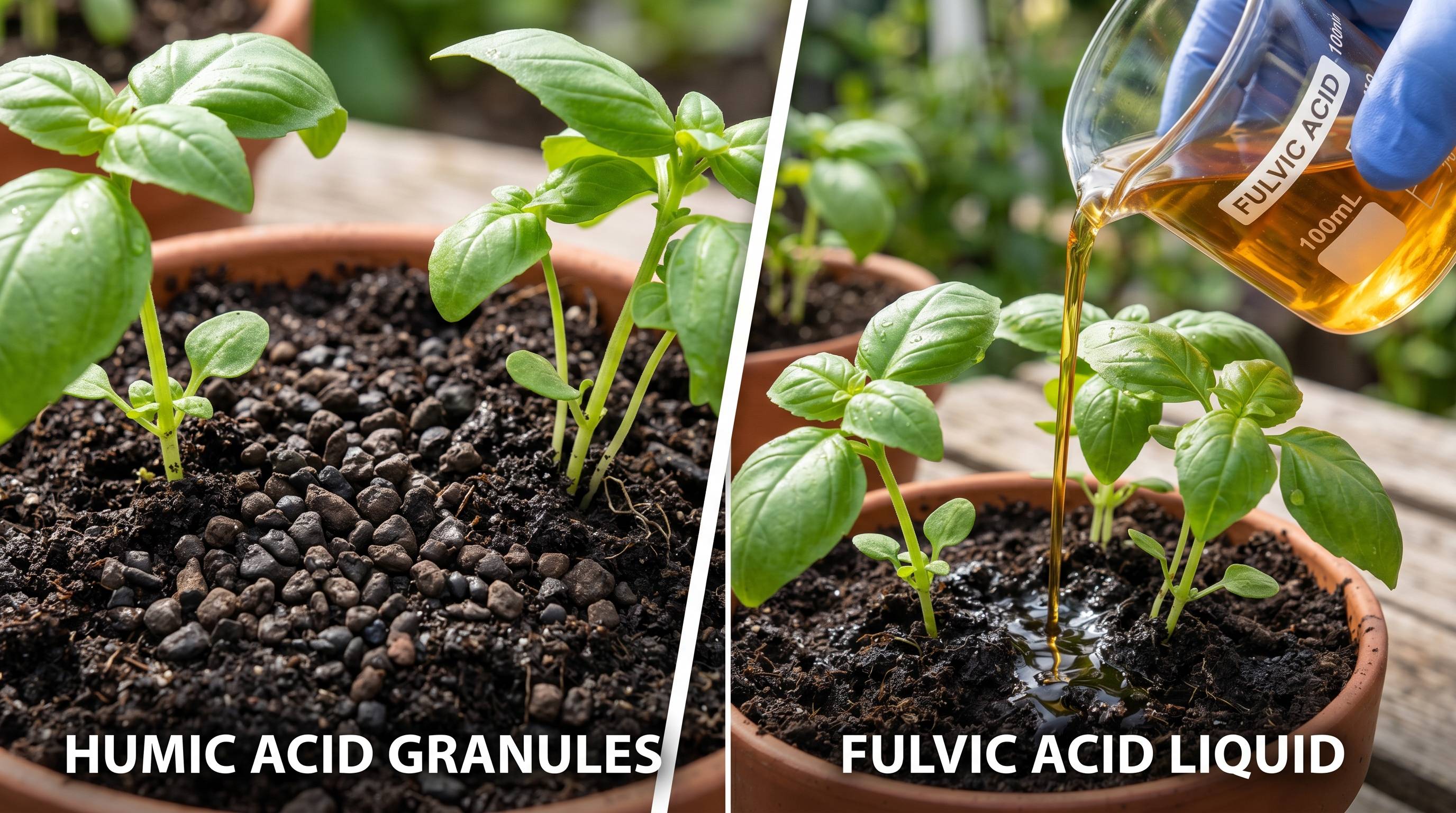
Humic acids excel at building soil structure and water retention, while fulvic acids penetrate plant tissue directly for rapid nutrient delivery
Molecular size determines application method: large humic molecules improve soil; small fulvic molecules cross plant membranes
Combining both substances increases fertiliser efficiency by 20-50%, particularly for trace minerals and macronutrients
Professional-grade products deliver consistent results through controlled extraction and standardised concentrations
Understanding the science behind humic and fulvic acid applications transforms how gardeners approach plant nutrition. These natural soil conditioners work differently depending on how they're applied, requiring specific ratios to maximise their effectiveness.
Why Soil and Foliar Applications Need Different Humic Substance Strategies
The molecular structure of humic substances determines their best use. Humic acids, with their large molecular weight of 10,000-100,000 daltons, cannot penetrate plant leaf surfaces effectively. Their strength lies in soil improvement, where they bind to soil particles and create stable aggregates that improve water retention and nutrient storage.
Fulvic acids operate differently with their smaller molecular weight of 1,000-10,000 daltons. These yellow-brown compounds remain soluble at all pH levels and easily cross plant cell membranes. This makes them ideal for foliar applications where direct nutrient delivery is the goal. Professional earthworm-derived extracts like AgroVerm provide both compounds in optimal concentrations for different application methods.
Research confirms that the application method directly affects the optimal ratio. Soil drenches benefit from humic acid dominance (3:1 HA:FA), whilst foliar sprays require fulvic acid dominance (1:2 HA:FA) for maximum nutrient uptake efficiency.
Humic Acid's Dominance in Soil Applications
Why Humic Acid Excels as a Soil Builder
Humic acids function as nature's soil architects. Their large, complex molecules bind soil particles together, creating stable aggregates that improve soil structure dramatically. This aggregation increases soil porosity, allowing better air and water movement through the root zone.
The high cation exchange capacity (CEC) of humic acids enables soils to hold more nutrients without leaching. Sandy soils particularly benefit from this property, as humic acids add negative charge sites that prevent valuable nutrients from washing away with irrigation or rainfall. Studies show humic acid application can increase soil CEC in degraded soils.
Water retention improves significantly when humic acids are incorporated into soil. The molecules create microscopic reservoirs that release moisture gradually as plants need it, significantly reducing both drought stress and waterlogging risks in container and field applications. This buffering effect reduces both drought stress and waterlogging risks.
How Fulvic Acid Complements Soil-Applied Humic Substances
Fulvic acids serve as the delivery system within humic acid-dominated soil applications. Their superior chelation capacity binds micronutrients into plant-available forms. Iron, zinc, manganese, and copper become more accessible to roots when chelated by fulvic compounds.
The pH-stable nature of fulvic acids allows them to function effectively across varying soil pH levels. Unlike humic acids, which precipitate in acidic conditions below pH 6, fulvic acids remain active and soluble. This pH stability ensures consistent nutrient delivery regardless of seasonal soil chemistry changes.
Microbial activity increases when both humic and fulvic acids are present in soil. These compounds serve as carbon sources for beneficial bacteria and fungi, promoting a healthy soil ecosystem that supports plant growth through improved nutrient cycling and disease suppression.
Evidence-Based Application Rates for Soil Health
Research-backed application rates for soil drenches recommend diluted concentrations of humic substances, with the 3:1 HA:FA ratio providing optimal results. Higher concentrations show diminishing returns, whilst lower concentrations fail to achieve meaningful soil improvements.
Timing matters significantly for soil applications. Pre-season incorporation of humic acids allows time for soil structure development before planting. Monthly applications during the growing season maintain nutrient availability and soil biological activity throughout the crop cycle.
Coverage calculations show that quality liquid concentrates treat garden areas effectively when properly diluted. Professional growers often apply granular humic acid at planting followed by liquid fulvic acid supplements during active growth periods.
Fulvic Acid's Superior Performance in Foliar Applications
Molecular Properties That Enable Leaf Penetration
Fulvic acids possess unique molecular characteristics that make them exceptionally effective for foliar feeding. Their small molecular size allows passage through leaf stomata and cuticle layers that block larger compounds. The yellow-brown colour indicates their low-molecular-weight composition that plants readily absorb.
The polar nature of fulvic acid molecules improves their ability to cross lipid barriers in plant tissue. Hydroxyl, carboxyl, and amino functional groups create multiple binding sites for nutrients whilst maintaining water solubility. This dual affinity enables efficient transport across cellular membranes.
pH stability across all ranges means fulvic acids remain active in foliar spray solutions regardless of water quality or tank-mix compatibility issues. This reliability ensures consistent performance across different growing environments and spray programmes.
Why Humic Acid Struggles in Foliar Systems
Humic acids face significant barriers in foliar applications due to their large molecular structure. The dark brown to black compounds cannot penetrate leaf surfaces effectively, often remaining on the leaf surface where they may cause burning or clogging of spray equipment.
Precipitation issues arise when humic acids encounter acidic spray solutions or hard water. The molecules clump together, forming particles that can block spray nozzles and create uneven application patterns. This instability makes humic acids unreliable for precision foliar feeding programmes.
Dark humic acid residues may remain on leaf surfaces after application. Unlike the transparent fulvic acid films, these deposits can create visual concerns, though research indicates humic acid applications can actually improve photosynthetic efficiency in stressed plants.
Maximising Nutrient Delivery Through Plant Tissue
Foliar applications with fulvic acid-dominant formulations (1:2 HA:FA ratio) increase nutrient uptake efficiency by 20-50%, particularly for micronutrients. The superior chelation capacity of fulvic acids ensures that iron, zinc, and manganese remain available for plant uptake even in challenging conditions.
Response times with foliar fulvic acid applications are dramatically faster than soil applications. Visual improvements in plant health often appear within days to weeks, compared to several weeks for soil-applied treatments. This rapid response makes foliar fulvic acid ideal for correcting acute deficiencies.
Stress tolerance improves significantly when plants receive regular foliar fulvic acid treatments. Improved antioxidant production and cellular metabolism help plants cope with drought, temperature extremes, and transplant shock more effectively.
Molecular Science Behind Application Method Selection
Size Matters: Molecular Weight Differences
The molecular weight gap between humic and fulvic acids determines their biological activity and application potential. Humic acids, at 10,000-100,000 daltons, function as slow-release soil conditioners that persist for months in the soil environment. Their large size prevents leaching but also limits plant uptake.
Fulvic acids, ranging from 1,000 to 10,000 daltons, move freely through soil solution and plant tissue. This mobility makes them efficient transporters for chelated nutrients, but also means they require more frequent applications to maintain effectiveness. The trade-off between persistence and mobility guides application strategy.
Bioavailability correlates inversely with molecular size in humic substances. Smaller fulvic acid fractions show greater biological activity per unit weight compared to larger humic acid molecules. This explains why fulvic acid concentrates command premium pricing despite their lower total organic matter content.
pH Stability and Solubility Factors
pH behaviour differs markedly between humic and fulvic acids, affecting their practical application ranges. Humic acids precipitate in acidic conditions and show reduced solubility in acidic conditions common in many European soils. This limitation restricts their effectiveness in areas with naturally acidic growing media.
Fulvic acids maintain solubility across pH 1-12, making them universally applicable regardless of soil or water chemistry. This stability ensures consistent performance in foliar sprays where pH levels may vary due to tank-mix combinations or regional water quality differences.
Chelation stability varies with pH for both compounds, but fulvic acids maintain stronger metal-organic complexes across broader pH ranges. This stability prevents nutrient precipitation in spray tanks and ensures delivery of bioavailable nutrients to plant tissue.
How Humic and Fulvic Acids Improve Fertiliser Efficiency
Improved Nutrient Chelation and Transport
Chelation transforms insoluble nutrients into plant-available forms through organic molecular binding. Fulvic acids excel at this process, forming stable complexes with iron, zinc, manganese, and copper that remain soluble even in alkaline conditions where these nutrients typically precipitate.
Transport efficiency increases dramatically when nutrients are chelated by fulvic acids. The organic carriers facilitate movement across plant membranes and enable rapid distribution throughout plant tissue. Studies show 30-50% improvements in nutrient uptake when fertilisers are applied with fulvic acid chelators.
Synergistic effects occur when humic and fulvic acids work together in soil systems. Humic acids create the storage capacity whilst fulvic acids provide the delivery mechanism, resulting in sustained nutrient availability that matches plant demand patterns throughout the growing season.
Preventing Nutrient Loss and Lockup
Leaching prevention improves significantly in soils treated with humic substances. The increased cation exchange capacity holds nutrients in the root zone rather than allowing them to wash away with drainage water. This retention effect can reduce fertiliser requirements in sandy soils.
Nutrient lockup in alkaline soils decreases when fulvic acids are present to maintain micronutrient availability. Calcium-dominated exchange sites in calcareous soils often bind iron and zinc in unavailable forms, but fulvic acid chelation keeps these nutrients accessible to plants.
pH buffering by humic acids stabilises soil chemistry and prevents sudden changes that can precipitate nutrients. This stability maintains optimal conditions for nutrient uptake whilst reducing the risk of fertiliser burn from excessive concentrations.
Documented Plant Response Times and Results
Controlled trials demonstrate measurable plant responses within specific timeframes for different application methods. Foliar fulvic acid applications show visible improvements within days to weeks, whilst soil-applied humic acids produce structural changes over several weeks to months.
Root development increases by 15-30% in plants treated with appropriate humic/fulvic acid ratios. Improved root systems improve drought tolerance and nutrient access, creating positive feedback cycles that amplify initial treatment benefits throughout the growing season.
Yield improvements of 10-25% are consistently documented across multiple crop types when humic and fulvic acids supplement conventional fertility programmes. These gains result from improved nutrient use efficiency rather than simply adding more nutrients to the system.
Practical Application Guide for Small-Scale Growers
Soil Drench Protocol and Rates
Soil drench applications require careful attention to dilution rates and timing for optimal results. Follow manufacturer recommendations for dilution ratios, ensuring the 3:1 HA:FA ratio for soil conditioning benefits. Apply this solution every 7-14 days during active growing periods.
Pre-watering the soil before application ensures even distribution and prevents the concentrate from channelling through dry areas. Apply the solution slowly to allow soil penetration rather than surface runoff. Proper coverage ensures effective treatment of garden beds.
Timing applications for early morning or evening prevents rapid evaporation and allows maximum soil absorption. Avoid applying during periods of heavy rainfall that could leach the treatment before soil incorporation occurs.
Foliar Spray Technique and Concentrations
Foliar applications demand precise concentration control to prevent leaf burn whilst maximising nutrient delivery. Follow manufacturer guidelines for fulvic acid-dominant concentrates, creating the optimal 1:2 HA:FA ratio for leaf absorption. Test spray a small area first to check for any adverse reactions.
Spray coverage should create fine droplets that cover leaf surfaces evenly without causing runoff. Focus on younger leaves and growing points where nutrient demand is highest. Apply to both upper and lower leaf surfaces for maximum uptake potential.
Environmental conditions affect foliar application success significantly. Choose calm, humid conditions with moderate temperatures to prevent rapid drying and potential leaf burn. Early morning applications often provide ideal conditions for maximum absorption.
Timing and Frequency Guidelines
Seasonal timing aligns applications with plant growth cycles for maximum benefit. Begin soil applications before planting to establish improved soil conditions. Continue with monthly soil treatments and bi-weekly foliar applications during active growth periods.
Growth stage considerations guide application frequency adjustments. Seedlings and young plants benefit from weekly foliar applications, whilst mature plants require less frequent treatments. Reduce applications during dormant periods but maintain periodic soil treatments to preserve soil biology.
Weather pattern awareness prevents waste and maximises effectiveness. Avoid applications immediately before heavy rainfall for foliar treatments, but time soil applications to coincide with moderate moisture that aids incorporation without causing leaching.
Choose Professional-Grade Humic and Fulvic Products for Reliable Results
Quality variations in humic and fulvic acid products significantly affect performance outcomes. Professional-grade extracts provide standardised concentrations and proven extraction methods that ensure consistent results across different growing conditions. Different source materials offer varying benefits, with vermicompost-derived products providing excellent bioactivity due to their optimal molecular composition and natural processing through vermiculture.
Source verification matters when selecting humic and fulvic acid products for serious growing operations. Look for products with detailed analysis certificates showing humic and fulvic acid percentages, molecular weight distributions, and trace element content. Organic certification ensures sustainable extraction methods and the absence of synthetic additives that could harm beneficial soil organisms.
Professional extraction methods preserve the natural balance of humic and fulvic acids whilst maintaining biological activity. Cold-water extraction processes protect delicate molecular structures that heat-based methods often damage. This preservation of natural ratios and bioactive compounds directly translates to improved plant response and growing success.
For reliable, research-backed humic and fulvic acid solutions that deliver professional results for home gardeners, visit HUMKO's AgroVerm liquid humic acid extract — a scientifically formulated plant nutrition product derived from closed-loop vermiculture.
The Humko Plant Health Expert Team is a group of horticultural scientists, soil biologists, and professional gardeners based in Bled, Slovenia. With roots going back to 1985, our team brings together nearly four decades of hands-on research in mycorrhizal biology, humic acid chemistry, substrate science, and professional plant nutrition.
We've worked on over 1,000 projects — from Dutch-style commercial greenhouses and golf courses to vertical green walls, ornamental gardens, and urban rooftop installations. Our formulas have been field-tested in the most demanding growing environments on earth before we ever offered them to home gardeners.
Everything we publish is grounded in real science and real growing experience. We don't repeat what's already on the bag — we explain why plants behave the way they do, and what actually makes a difference in the soil. Our goal is simple: help you grow plants that don't just survive, but thrive — with less guessing and less anxiety.
Based in Slovenia | EU-certified products | 40 years of professional horticulture